
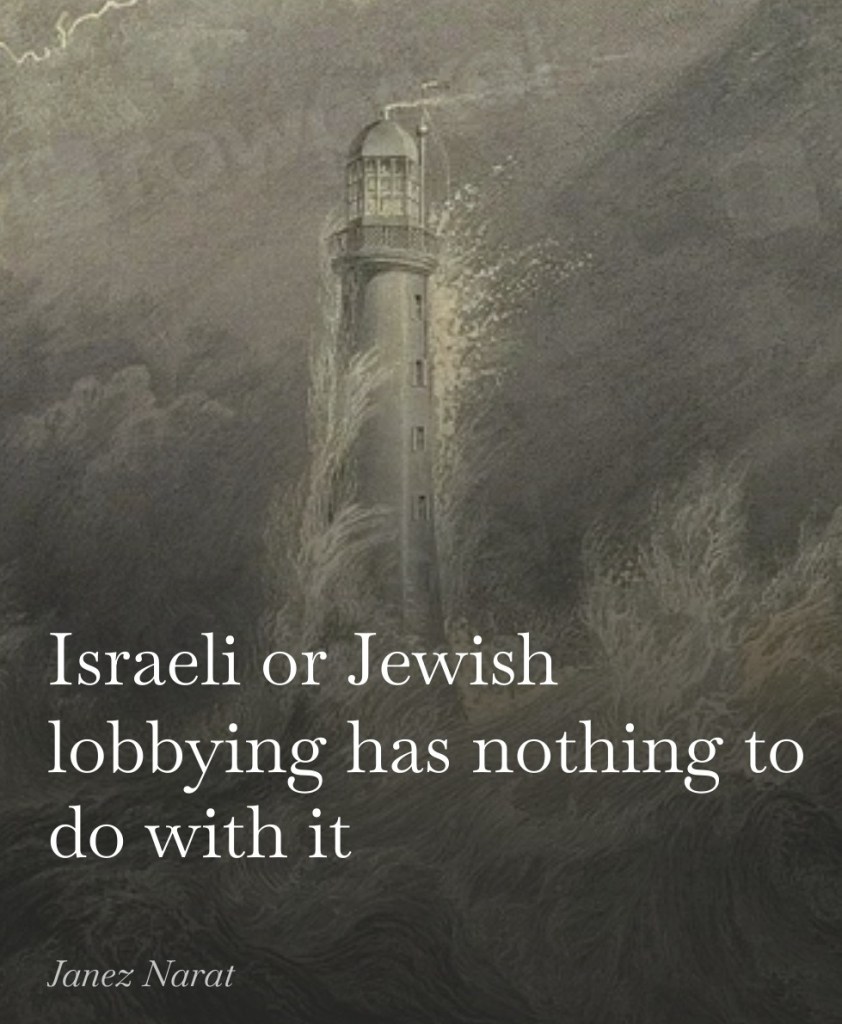
Appealing to it as the primary explanation is an intellectually shallow reflex—one that reveals more about the speaker than it does about the situation itself.
The real driver is something far less discussed and far more consequential: a modern strain of evangelical theology—simplistic, unbiblical, unhistorical, and utterly earthly—profoundly misapplied.
What we are witnessing is not statecraft, nor the clash of civilizations—it is the political fruit of a theologically stunted imagination.
Christian Zionism, in its modern form, is not ancient, not historic, and certainly not rooted in the confessional tradition of the Church. It is a 19th-century innovation, born of dispensational speculation and popularized through prophecy charts, not the product of careful exegesis of Scripture.
Historic Christianity—particularly within the Reformed tradition—has never taught that the modern nation-state of Israel occupies a unique, covenantal role in redemptive history. The promises of God are fulfilled in Christ, not in geopolitics. “For all the promises of God in Him are Yes, and in Him Amen” (2 Corinthians 1:20). That is not metaphorical language. It is doctrinal clarity.
The New Testament does not point us toward a revived ethnic nationalism as the hope of the world.
It does the opposite.
“There is neither Jew nor Greek… for you are all one in Christ Jesus” (Galatians 3:28). The dividing wall has been broken. The people of God are no longer defined by land, blood, or borders—but by union with Christ.
This does not mean Scripture is silent about ethnic Israel. Paul speaks of a mystery and of mercy (Rom 11) — but nowhere does he enlist the Church or the state as agents of its fulfillment, nor does he redirect these promises to any modern political entity, but to a people according to the flesh. The gifts and calling of God are irrevocable precisely because they are God’s work, not ours.
Yet this is precisely what Christian Zionism reverses. It re-erects what Christ has torn down in a manner both coarse and forceful.
Worse still, it takes some of the most symbolically dense and historically debated passages in Scripture—particularly in apocalyptic literature—and treats them as if they were a foreign policy briefing.
Generations of theologians approached books like Revelation with humility, restraint, and reverence.
Today, we see the same verses tossed about by the restless spirits occupying hundreds of pulpits across America, joining hands with media platforms and flag-draped stages — building military doctrine out of them.
This is not zeal. It is presumption.
And it does not remain in the realm of theory. Given enough time, it manifests itself in war and moral confusion — exactly what we are witnessing today.
Figures like Pete Hegseth embody this confusion perfectly—a fusion of nationalism, performative masculinity, and shallow theology, worn quite literally on the skin like a badge of honor. The aesthetic is loud; the theology is thin. The posture is aggressive; the understanding decidedly juvenile.
He and others like him were not elevated by some shadowy “lobby.” They are the product of a vast and deeply influential evangelical subculture—tens of millions strong—that has been catechized not by the Church’s historic and biblical teachings, but by end-times sensationalism and political tribalism.
That is the force at work Today in the Middle East.
And it should alarm anyone who takes both theology and “living peaceable lives” seriously.
Because when Scripture is bent to serve a political ideology, it ceases to function as revelation and becomes mere propaganda. And when that propaganda is armed with political power, the consequences are not merely doctrinal (affecting the church)—they are global.
The tragedy is not only that this theology is wrong. It is that it is loud, belligerent, and increasingly consequential.
And it deserves to be confronted—not politely, but plainly and uncompromisingly.

 Pared To Truth
Leave a comment