
Yes, what about that.
The notion of patriotism is connected with many strands to the topic of my previous post. My original intent was to address them together. However, it became obvious that the post was getting lengthier than expected, and so ‘extricating’ patriotism to its own heading seemed like the most sensible route. I sought to follow the same general structure, going from natural observations to doctrinal.

It also seems appropriate to discuss patriotism in its separate heading considering the fact that I found virtually nothing redeemable with Christian Nationalism, and in fact have found much wrong, whereas the case with patriotism is not so black and white. With proper perspective, there are, of course, things worthy of commendation when it comes to patriotism.
A Word on Motive and Context
Considering the sensitive nature of the topic—patriotism, like politics, can quickly stir up the darker impulses of our nature—I feel it is important to establish that any perceived negativity arises from a sound and principled place.
While it is true that I’ve never found outward expressions of patriotism particularly useful—and have, at times, questioned the need some feel to (over)state their devotion—it is also true that I’ve managed to raise my children with a sense of duty: one serves in the Armed Forces, another as a First Responder. I could not be prouder.
Patriotism vs. Nationalism
The essence of patriotism is generally understood to mean a love for one’s country, people, and culture. It is a devotion of the heart, in contrast to nationalism, which takes those same sentiments and projects them against others: our nation is “better,” our people are “better,” our culture is “better.”
The problem is that these sentiments rarely stay in their lanes. Most people don’t care to work out the distinctions. Devotion to one’s heritage is generally accepted as harmless and typically passes without suspicion in polite company. And so while patriotism free of nationalism may be possible in theory, in practice it’s as rare as a unicorn.
In the world we actually inhabit, the lines between the two are usually crossed without notice.
Natural Affection and Instinctive Loyalty
A comedian once joked that it’s ridiculous to keep saying “America is the greatest country,” because most of us say that simply because we were born here. If we’d been born in Ghana, he added, we’d be saying the same about Ghana. This type of humor works because it exposes our common human nature. The more ingrained the social custom under the comedic ‘microscope’, the clearer we see that we are often just like parrots squawking ‘best nest ever’—feathers and all.
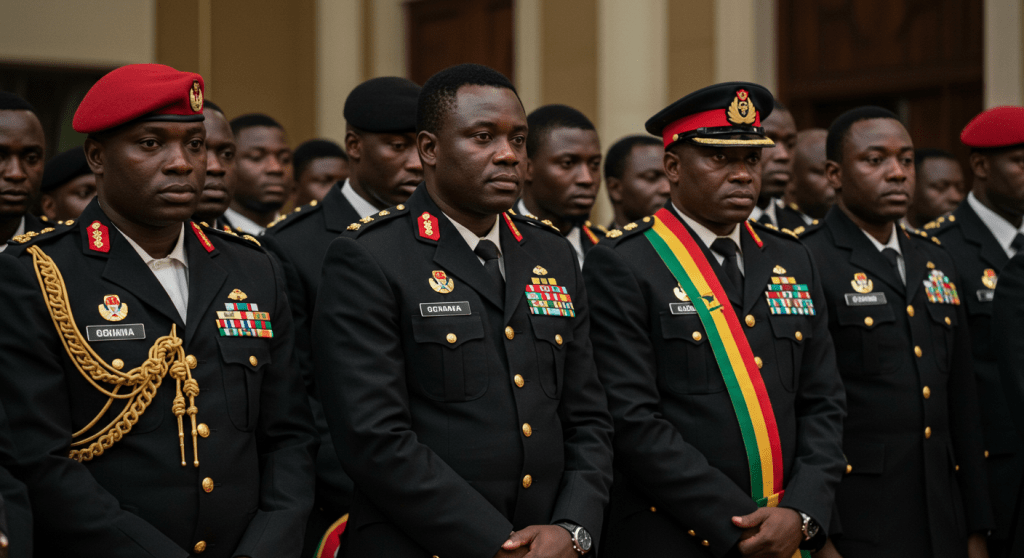
Sociologists and theologians speak of “natural affinity”—a bond we inherit and form by being born and raised in a particular place. We gravitate toward what is familiar. Anyone raised in a land where fairness and justice are reasonably upheld will develop a lifelong bond toward that place, culture, and country. We know this instinctively. It’s why high treason still carries harsh penalties in modern democracies. Likewise, we all know we ought to love and respect our parents. We are bound to them by life.
Patriotism, it seems to me, belongs in this same category. It is an instinctive, natural bond, not easily broken.
But if this is true, what need is there to continually profess one’s love for one’s country? Does it not make it rather similar to proclaiming, “Grass is green!” or “Oxygen is good!”?
Reflections from a Shattered Homeland
My own views on patriotism have undoubtedly been shaped, in part, by personal experience. I was born in a country that no longer exists, one ripped apart by war. Like all my former countrymen at that time, I navigated the full spectrum of emotions that civil conflict thrusts upon those who live through it.

Each of us had to grapple with the unraveling Yugoslav federation as former states emerged with ambitions of sovereignty—in the case of Slovenia, crystallized in a 1990 referendum. When the votes were tallied, 95 percent of Slovenians backed independence. By then, I was already in the U.S.—old enough to vote but unable to cast a ballot. Had I been there, I’m certain I would’ve supported independence.
Today, I’m not so sure I’d make the same choice.
In fact, I’m convinced I’d vote against independence and for preserving the union.
Time, distance, and the grim hindsight of the bloody conflict that ensued have led me to believe that Yugoslavia’s disintegration caused far more harm than good. Reflecting primarily on how it reshaped the mindset of my former countrymen, I can say without hesitation that, if I were voting now, I’d stand firmly for the federation. To be clear, the political and economic system needed reform—no doubt about that—but I lay the blame for dissolving the union squarely at the feet of the patriotic/nationalistic fervor in all former states that hijacked the process of reforming the union.
Slovenia, “The Erased”, and the Burden of History
In 1992, about 25,000 people—mostly from other former Yugoslav republics—were stripped from Slovenia’s registry of permanent residents. These were individuals who’d lived and worked there legally before independence in 1991. But after a new citizenship law, they had just six months to apply for status. Some mistrusted the process, others were loyal to their home republics, and many, fleeing war, simply didn’t know. When the deadline passed, they became illegal immigrants overnight—cut off from healthcare, jobs, housing, and legal protections. Some faced deportation or detention; others, despite years or decades in Slovenia, were left destitute.
In 2012, the European Court of Human Rights ruled in their favor, but it was too late. Compensation was meager, the process sluggish and bureaucratic, and the apology rang hollow.
Now… Had these 25,000 hailed from Western Europe, for example, such an injustice would’ve been unthinkable. The truth is, Slovenians have long held themselves apart from their ex-Yugoslav neighbors. Echoes of today’s American rhetoric—’they’re not sending their best,’ ‘they’re from different cultures’—once rippled through Slovenia’s polite society. (Frankly, it’s an old script, replayed for centuries.)
So with a bureaucratic pen stroke, lives were quietly upended—an administrative ‘ethnic cleansing’ of sorts. Shameful. Slovenia fell short of the democratic ideals it claimed at independence, and by trying to bury this chapter, it only deepened the shame.
Croatia, Whitewashed Memory, and the Idol of Nation
When it comes to patriotic excess and nationalistic fervor among the former republics, however, Slovenia isn’t even the worst offender. That distinction, without question, belongs to neighboring Croatia.
There, amid the fervor of newfound sovereignty and the war that followed, any emphasis on national identity and patriotism was embraced with such abandon that even Croatia’s shameful WWII collaborationist past has been whitewashed—repackaged as part of a broader historical struggle for independence. These efforts haven’t faded since the civil war; they’ve only intensified. (Yes, I call the Yugoslav conflicts of the 1990s a civil war, as they meet every definition of the term.)
Despite international criticism and recurring domestic controversies, Croatian administrations—across party lines—have failed to firmly distance themselves from the revisionist nationalism that grips much of the public. Nothing illustrates this more starkly than the government’s refusal to censure a certain singer—whose name I won’t dignify by repeating—who’s become a cultural icon of this ideology. Over the past 30 years, his popularity has only soared. In most countries, he’d be a source of shame; in Croatia, he enjoys near-heroic status.
But the problem isn’t one singer or a fringe movement. It’s a nation’s persistent failure to confront its darkest chapters—and its lingering ambivalence toward the brutish, aggressive nationalism that seeks to drown out every dissenting voice… all of it draped in the familiar trappings of patriotism and ‘love of the nation.’
Patriotism, Conformity, and the use of Symbols
The examples above—born of war and historical trauma—may be extreme cases of patriotism gone astray. But does patriotism always veer toward excess? I fear it often does, especially when it morphs into jingoism, that shrill, chest-thumping fervor that drowns out reason. Too many evangelicals, caught in this tide, sound less like disciples of Christ and more like cheerleaders for a cause that’s all about flag rather than faith.
Patriotic zeal tends to cloud judgment since, by nature, we’re all less likely to question what we’ve been raised to revere. Governments know this and exploit it, especially in wartime, when dissent is swiftly branded as betrayal. The Dixie Chicks come to mind, hounded for daring to criticize the Second Gulf War. Countless other cases echo the same pattern.
Mark Twain likely had this in view when he wrote, “Patriotism is supporting your country all the time, and your government when it deserves it.”
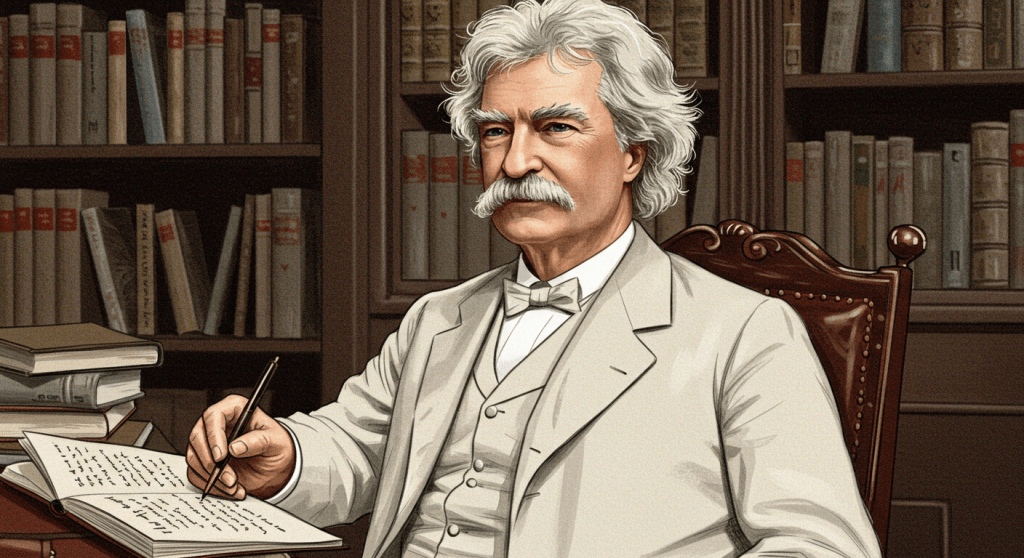
In peacetime, this patriotic bent often fixates on outward displays: Who kneels for the anthem? Who refuses to stand? Who burns the flag in protest? These are society’s modern loyalty tests, typically driven by conservatives and woven into a broader national doctrine. But such policing is as shallow as a Fox News segment fishing for outrage with a red, white, and blue sequined net.
Humans naturally crave tangible symbols for intangible convictions; we’re all prone to it and this fixation on externals isn’t unique to national allegiance—it spills into other realms, like faith. Many Christians stake their spiritual identity on crosses, Ten Commandments displays, or references to God in civic spaces, as if these were vital to belief or to our nation’s Christian standing. Yet Scripture nowhere endorses these symbols. They don’t bolster faith or make a nation “more Christian” or pleasing to God. They cater to minds that lean on visible tokens for inner certainty—and often demand others follow suit.
Shallow, indeed.
Symbolism in the Bible: Then and Now
What do the Scriptures say about symbols and patriotism? For believers, this question carries weight and cannot be ignored.
The Bible certainly employs symbolism, particularly in the Old Covenant, where ceremonial laws acted as signs and reminders of Israel’s covenant with God and His protection. The Old Testament is rich with such imagery. Yet, with Christ’s coming, this changed. While a deeper exploration might warrant its own discussion—perhaps a future post—the New Covenant, apart from Baptism and the Lord’s Supper, frees the Church from outward rituals of faith.
Given the Old Covenant’s heavy reliance on symbolism, one might expect the New Covenant—described as superior (Hebrews 8:5)—to amplify it. Instead, the opposite holds true. As Paul explains, “The law was our tutor to bring us to Christ, that we might be justified by faith. But after faith has come, we are no longer under a tutor” (Galatians 3:24–25).
Thus, those in Christ, indwelled by the Holy Spirit, live in an age of spiritual maturity. This isn’t to diminish the Old Covenant, which was good and perfectly suited to its time in God’s wisdom. But mature faith, especially outside the Church’s context, has little need for external symbols.
Scriptural Direction for Earthly Allegiances
How does this connect to patriotism? It serves as a reminder that an abundance of outward expressions—symbols and ceremonies—doesn’t always signal deeper conviction. In fact, one could argue the reverse: the stronger the conviction, the less need for external displays or rituals.
So how should Christians express patriotic instincts in light of their faith? Does Scripture guide our earthly duties? Absolutely. We are called to submit “to every ordinance of man for the Lord’s sake” (1 Peter 2:13) and to show honor to governing authorities (Romans 13:7; 1 Peter 2:17). True patriotism is of the heart. If loyalty, duty, and respect for authority reflect our devotion to our Heavenly King, then yes, I’d humbly take my seat among the patriots—if they’ll have me. Yet I feel no need to constantly proclaim my earthly allegiance.
Still, when it comes to the fervor of our earthly allegiances, Scripture offers a profoundly humbling perspective.
The Crux of the Matter
Here, I believe, lies the heart of the question for every believer.
When defending himself against false apostles who boasted of their lineage and credentials, Paul declares:
“If anyone else thinks he may have confidence in the flesh, I more so: circumcised the eighth day, of the stock of Israel, of the tribe of Benjamin, a Hebrew of the Hebrews; concerning the law, a Pharisee; concerning zeal, persecuting the church; concerning the righteousness which is in the law, blameless. But what things were gain to me, these I have counted loss for Christ. Yet indeed I also count all things loss for the excellence of the knowledge of Christ Jesus my Lord… and count them as rubbish, that I may gain Christ” (Philippians 3:4–8).
Paul’s résumé wasn’t just impressive—it was unmatched. He knew it, as did his critics. By first-century Hebrew standards, his pedigree was impeccable. Yet he deems it all worthless compared to knowing Christ.
Similarly, in Luke 14, Jesus teaches on the cost of discipleship:
“Now great multitudes went with Him. And He turned and said to them, ‘If anyone comes to Me and does not hate his father and mother, wife and children, brothers and sisters, yes, and his own life also, he cannot be My disciple’” (Luke 14:25–26).
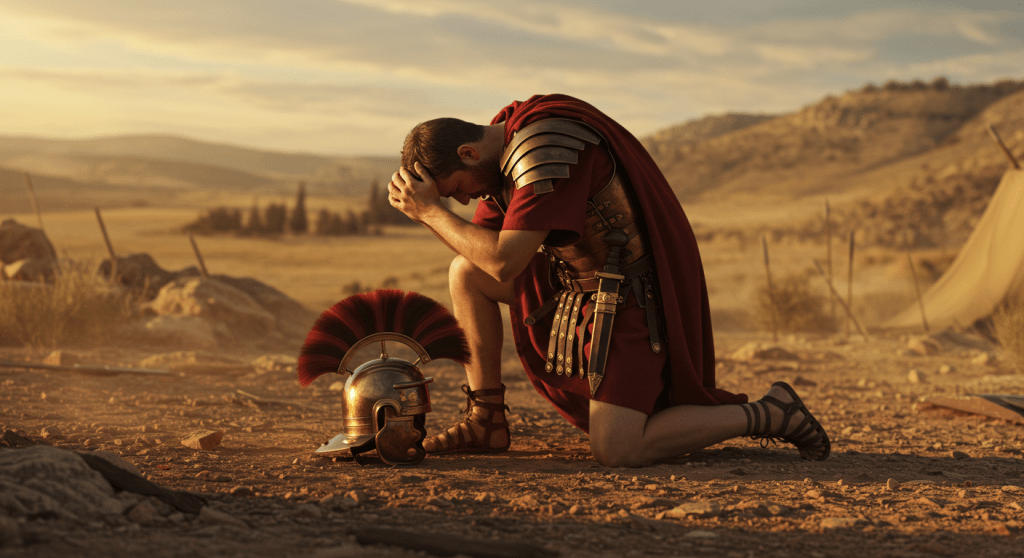
Jesus’ use of “hate,” like Paul’s comparison, isn’t a call to reject or devalue family. It’s a demand for a radical reordering of priorities, where even our deepest earthly bonds—love and duty, woven from birth—pale beside devotion to Him.
If this applies to our most sacred ties, how much more to patriotism and every other earthly loyalty? How much passion for these bonds—especially patriotism—should outsiders see in us? Do our public displays reflect that we count them as nothing compared to knowing Christ?
I generally avoid debates, online or otherwise, about patriotism and divisive politics. But from this perspective, I’d welcome the discussion anytime, anywhere. Let’s talk politics or patriotism after agreeing that, next to Christ, they’re utterly insignificant. This view quickly douses overheated passions—and rightly so. Too many in evangelical churches seem to equate cheering for America with cheering for God.
Final Thoughts: A Sobering Caution
Some might argue, “I hear you on those other countries, but the United States has been a force for good—a beacon of freedom, championing democratic ideals worldwide.” I submit that this notion, far from noble, dangerously blends biblical doctrine with worldly pride. Since World War II—and especially after the Cold War—America’s zealous pursuit of these ideals has cost thousands of American lives and millions more globally. A glance at the history of conflicts our nation has fueled or fought over the past 70 years bears this out.
As Christians, we should discern that God, throughout history, has ordained diverse forms of government, suited to different times, nations, and peoples. The idea that our Founding Fathers ‘devised’ something so exceptional that we must defend and export it at gunpoint across the globe is, frankly, immature. It might rally a more devoted citizenry, but for evangelicals who embrace it uncritically, it’s a snare—a trap of conscience from which many will struggle to break free, if God grants them eyes to see. Too many, I fear, will simply swell the ranks of the Christian Nationalist movement, unaware of the net they’re caught in.
This isn’t to dishonor those who’ve served our country. I understand the pride in loved ones who’ve fought—sons and daughters in today’s Armed Forces, or ancestors who battled Nazis to liberate Europe. Both my grandfathers fought the Germans and their collaborators; one died, the other carried a German bullet in his body until he passed at 89. I couldn’t be prouder of their sacrifice.
Yet, beside the surpassing knowledge of Christ, even our proudest heritage fades to insignificance.
No, this perspective doesn’t diminish duty or honor. Rather, it sets evangelicals apart from those whose god is not Christ but American conservative doctrine. For even if America became the greatest nation by every worldly measure—and evangelicals helped make it so—we’d be no closer to bringing God’s Kingdom to our neighbors or to the world.
If our neighbors came to believe that following Christ means shrill patriotism or perpetual outrage over Fox News talking points, that would be a tragedy. Yet I fear that, to those watching, we evangelicals are well on our way to weaving patriotism, nationalism, politics, and “Making America Great” into our faith and Christian doctrine.
Tragedy, indeed.

 Pared To Truth
Leave a comment