
The Bruised Reed in the Dark (Part 1): Walking Gently
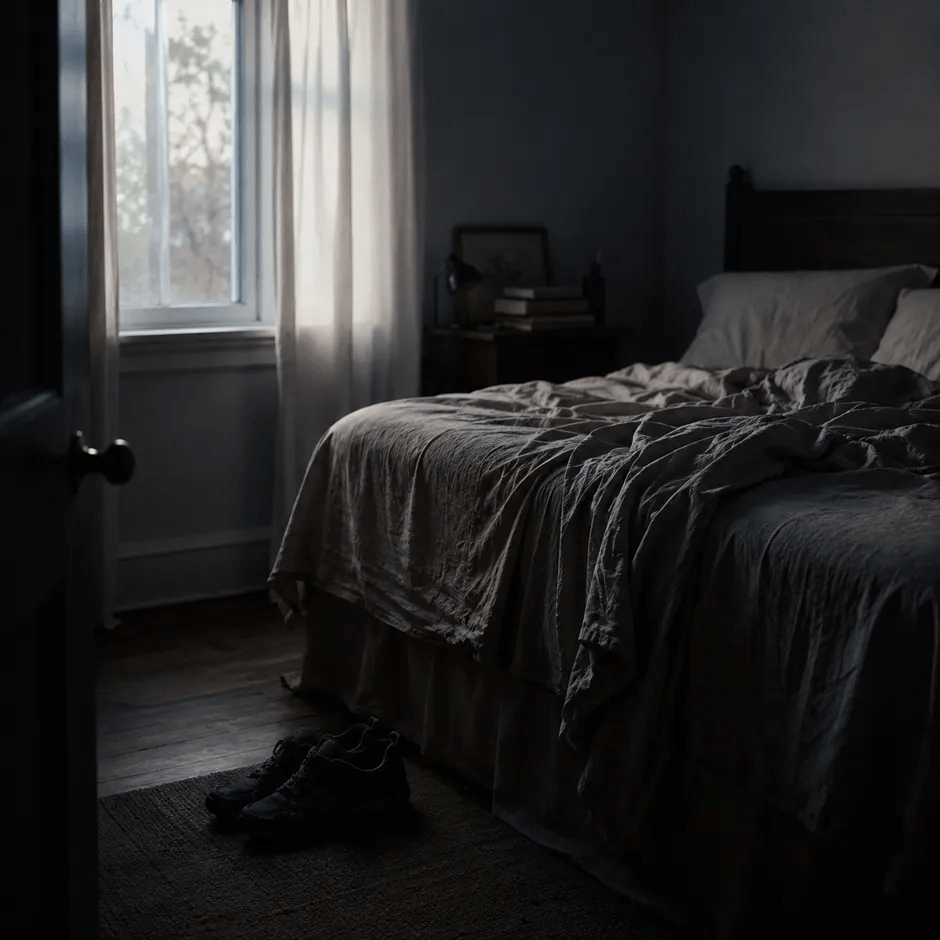
There are sorrows in life that most people can understand.
A death in the family.
A marriage under strain.
A child in trouble.
A job lost.
A diagnosis received.
A betrayal that still has a name and a face.
These sorrows hurt, and some of them alter the whole landscape of a man’s life. But even when they are terrible, they are usually connected to something visible. You can point to the wound. You can explain, at least in part, why the house has gone quiet.
Depression is different.
It is not ordinary sadness, though sadness may accompany it. It is not discouragement, though discouragement may be part of it. And it is not grief, though grief may open the door through which it enters.
It is a darker thing — a time when the soul seems to lose its ordinary powers of motion. When the future disappears behind a wall. When the body is still alive, but the inward machinery by which a man rises, works, speaks, hopes, plans, prays, laughs, or even wants to want, has somehow seized up.
Those who have never known it personally often reach for analogies too small for the thing itself. They imagine a gloomy season, a bad week, a discouraging month, perhaps a personality inclined toward melancholy.
But severe depression is not merely a black cloud over the head.
It is more like waking to discover that the laws of gravity have changed, and only you seem to have noticed. Ordinary duties become mountains. Simple conversations become labor. The future becomes not merely uncertain, but unbearable to contemplate. Even the past, which once held memories of warmth and safety, can become inaccessible, as if everything related to joy in your life belonged to another man whose papers you now happen to possess.
This is part of what makes depression so difficult to explain. The sufferer often cannot give a satisfactory account of his own condition. He may have reasons, of course. Loss, exhaustion, trauma, stress, heredity, illness, sin, disappointment, age, fear — all these may be involved. But the actual experience exceeds explanation.
The severely depressed person ceases to ask, “Why am I sad?”
Often, the question has become something more frightening:
“Why should this life be lived at all?”
That question is not melodrama. It is not self-pity. It is not weakness masquerading as depth. It is, for many, the plain description of the thing.
And this thing is common.
It visits the religious and the irreligious. It visits Christians, Muslims, Jews, agnostics, atheists, cynics, stoics, and people too tired to know what they believe. It visits the disciplined and the reckless, the educated and the simple, the wealthy and the poor, the young and the old, the pastor and the parishioner, the soldier and the child, the man with a good marriage and the woman with every outward reason to be thankful.
This is one reason we should be careful before we speak when our paths cross with someone in such a state.
Because depression is not impressed by our categories. It does not politely remain outside the homes of people who “should know better.” It does not retreat because someone is strong, disciplined, educated, successful, loved, responsible, or surrounded by every outward reason to be thankful.
I know this not as a clinician, but as one who has lived under its weight more than once.
My first severe depression came when, outwardly at least, many things in my life should have suggested promise.
But inwardly, life stopped.
It shattered.
That is not a word I use for effect. Depression leaves no strength for the present and no hope for the future. There remains only the strange torment of continuing to exist while no longer being able to live in the ordinary sense of the word.
People who have been there will understand that sentence immediately.
People who have not should resist the urge to correct it too quickly.
Nor does the affliction stay locked inside the sufferer.
Depression leaks into everything. It isolates a person from the very people who love him. It strains marriages and relationships, frightens children, exhausts families, and turns the most familiar rooms of a house into places of quiet torment.
And, in its most severe forms, it turns deadly. The statistics are overwhelming.
That alone should make us slow to explain and quick to draw near. Depression has a way of narrowing a man’s vision until the future seems to disappear altogether. It makes the temporary darkness feel permanent. It can make a suffering person believe things about himself, his family, his usefulness, and his future that are not true, even though they feel unanswerable at the time.
That is part of the danger.
The depressed mind does not merely suffer pain. It begins to interpret everything through pain — as if the clouds will never lift. This is a deep mystery, but hope removed, even temporarily, can produce that exact effect. So fragile are our minds.
This is where much harm is done, even by those who mean well. Especially by those who mean well.
Many see a man sitting in ashes and decide the moment requires an explanation. Or a theory. Or a comparison. Or a verse. Or an exhortation. Or, God help us, a rebuke delivered in the general tone of spiritual usefulness.
But more often than not, the most faithful thing one can do is not to explain the ashes.
It is to sit beside the one who cannot yet rise.
A quiet, unmistakable show of love is often the most faithful witness to those walking through trial — and so it is with depression.
There is a ministry in that silence.
And this is where we must begin.
Depression is not a mood.
It is an affliction.
A serious one.
If you have never endured it, be grateful — and learn to walk gently around those who have.
If you are enduring it now, do not make large decisions in the dark. Do not trust every thought that passes through your suffering mind. Do not confuse the absence of felt hope with the absence of hope itself.
For now, endure.
Even if endurance is measured only by the next hour, or the next minute. One breath at a time.
And for those who know God and are going through this, this much may be said now, gently and without triumphal noise:
The Lord is not far from you because you cannot feel Him.
The bruised reed is still in His hand.
And He does not break it.


Leave a Reply